Food is Political. If You Don’t Think So, You’re Privileged.
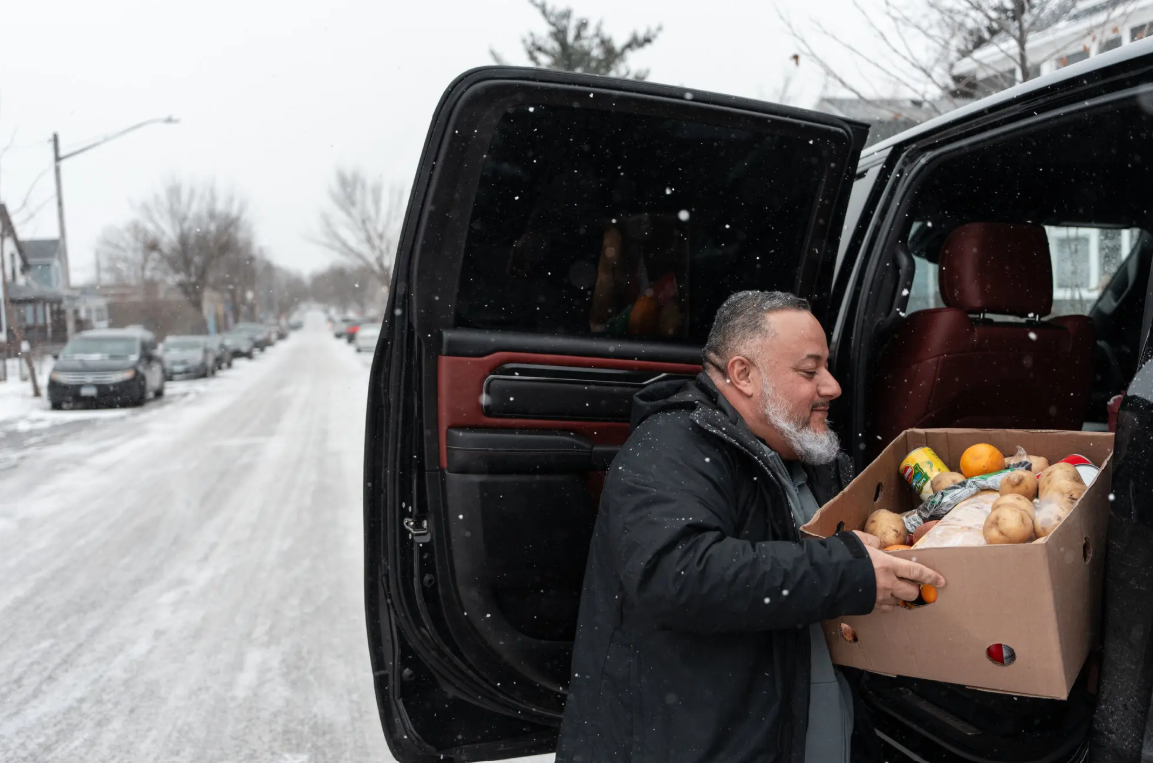
Sergio Amezcua, a pastor at Dios Habla Hoy in south Minneapolis, organized the effort by his church to help fearful immigrants remain at home. Credit...Todd Heisler/The New York Times
I’m going to say something that will sound dramatic, but it isn’t: food is political. And when I say that, I mean actual, real-life, basic survival politics. If you’ve ever been in a situation where you were scared to leave your house—or you know someone who has been—you understand what I’m saying. Food stops being a cute lifestyle choice and becomes a logistical problem.
That’s what’s happening in Minneapolis right now.
There are people organizing food deliveries for neighbors who are afraid to go out. Volunteers are coordinating meals for families who don’t feel safe walking into a store. Mutual-aid networks are doing what governments and institutions often don’t: showing up.
And contrary to what some might believe, it’s not just kind—it’s political. Because the ability to buy groceries without thinking about your safety is not something everyone gets to take for granted. It’s not a given. It’s not a “normal.” It’s a privilege.
When Food Becomes a Risk
Most of us (myself included) treat food like a background detail—something we pick up on the way home or something we plan for when we’re bored or inspired. But for many people, especially now, food is not a small thing or an afterthought. It’s a risk. It’s the difference between:
eating without fear and
wondering if leaving your home means putting yourself in danger.
When someone has to rely on friends, family members, or neighbors for food because leaving the house is a potential threat, food stops being a personal choice and becomes a survival strategy. That’s political.
Mutual Aid isn’t “Nice”—it’s Necessary
If you have access to the internet right now, you’re probably seeing the same thing I am: people in Minneapolis stepping up in the most basic, human way possible. Not because it’s trendy or “viral,” but because they’re trying to keep their neighbors alive. Free, no questions asked food deliveries aren’t just meals—they’re a message. And they’re saying: you are not alone.
A Quick Note to the “Food isn’t Political” Crowd
If you think food isn’t political, you’re either:
not paying attention, or
living in a world where your access is/was never questioned.
Because food access, especially right now, is tied to:
economic stability
immigration policy
housing security
community safety
and who gets to be protected in public spaces
So no, food isn’t “just food,” and it never has been.
What This Means for the Rest of Us
You don’t have to be in Minneapolis to understand this, you just have to notice. Because the truth is that food access and food security is one of the clearest ways we can see who gets to live safely and who doesn’t. And when we stop pretending it’s neutral, we start to understand what people are actually fighting for.
A Practical Call to Action
Want to help? The first step is noticing what’s happening and making yourself aware. After that, if you’re able, you can support:
local mutual-aid networks
community food distribution programs
restaurants donating meals
local organizations that are doing the hard work
And if you’re unable to donate or volunteer? That’s fine, but pay attention to what is happening. Because the moment you stop seeing food as neutral, you start seeing the world as it is. And that’s the first step.