You’re Not “Bad” at Portion Control—Your Food Might Be the Problem
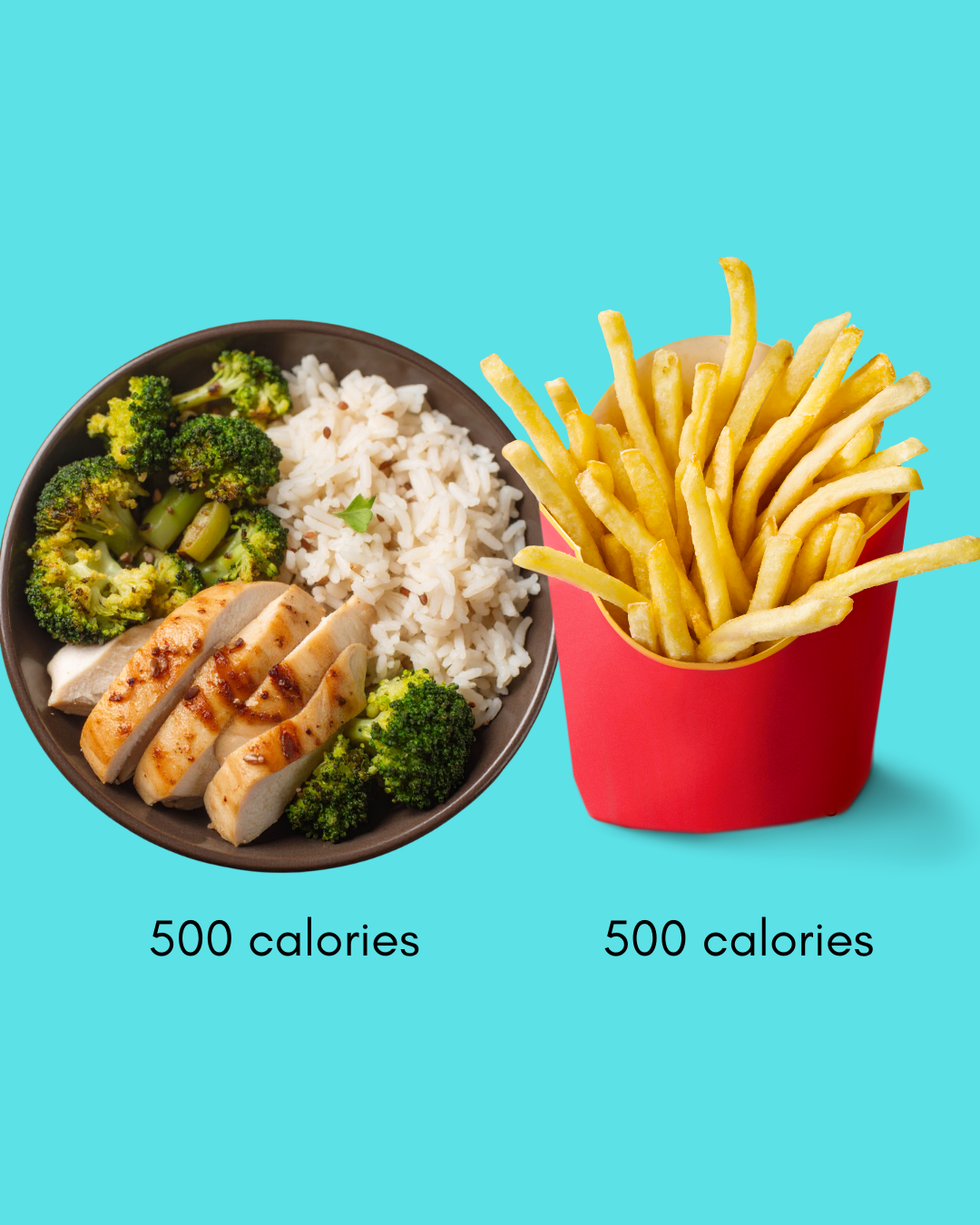
Chances are there’s probably been times where you’ve finished a meal and thought “wait…why am I still hungry?” Or maybe found yourself eating way more than you originally planned without meaning too—and it’s easy to assume it’s a willpower thing. However, when it comes to overeating, oftentimes it’s not just about calories, and it’s most certainly not about discipline.
So if portion control isn’t the problem, then what exactly is happening? And why are some foods so easy to overeat? A recent study published in The American Journal of Clinical Nutrition set out to explore just that.
The Study Setup
To better understand how different types of diets influence how much we eat, researchers revisited a tightly controlled study originally conducted in 2019.
In the 2019 study, participants were randomly assigned to one of two diets:
one diet was made up of mostly ultra-processed foods
one diet was made up of minimally processed foods
Each diet lasted for two weeks, and here’s where it gets interesting:
meals were matched for calories, macronutrients, sugar, sodium, and fiber
participants were told to eat “as much or as little as desired” (in other words, there was plenty of food and no pressure to restrict)
and they were given portions equal to about twice their estimated energy needs
In this newer analysis, researchers zoomed in on how different meal components influenced overall intake, while also looking more closely at micronutrient intake (things like calcium, iron, and vitamin B12).
What Researchers Found
After careful analysis, researchers found that when participants were assigned to the ultra-processed food diet, they consumed more calories overall—despite the fact that both diets being carefully matched. Specifically, they found that individuals consuming the ultra-processed diet ate about 500 more calories per day than those on the minimally processed diet. So what explains this difference?
Calorie density adds up quickly
Ultra-processed foods tend to be more calorie-dense, meaning they pack more calories into each bite. So even if people ate similar amounts of food, those calories added up faster.
In addition to calorie density, ultra-processed foods tend to combine refined carbs and fats in an almost “perfect” ratio that makes them easy to keep eating—or difficult to stop eating. On the other hand, minimally processed foods or meals are less “perfectly balanced” in this way—which may help people stop sooner, with less of a likelihood to overeat.
Eating speed plays a bigger role than you think
Interestingly, researchers also found that eating rate mattered a lot. Those consuming ultra-processed foods ate faster, thus consuming more calories per minute. This makes sense as ultra-processed meals typically tend to be softer and less fibrous, making them easier to eat more quickly, because texture is not as much of a barrier. Additionally, it takes a few minutes for your body to register that it’s full, so when you eat faster, it’s much easier to overshoot fullness without realizing it.
There may be more going on beneath the surface
Researchers also explored two emerging ideas:
Protein leveraging: the idea that we keep eating until we meet a protein “target”
Micronutrient deleveraging: the idea that we may continue eating when our food is low in essential vitamins in minerals in order to get enough of what we need
So if a diet is lower in protein or micronutrients—which ultra-processed diets often are—it may subtly, subconsciously push us to eat more overall. However, it’s important to note that these are theories, not proven drivers, but they help add additional context.
Let’s Make it More Relatable
Imagine you eat a meal or snack that’s high in calories but low in nutrients—like a slice of pizza and some french fries. Though you may feel physically full, chances are you’ll end up reaching for something else later.
Based off the findings from this study, that lingering hunger makes sense—and it’s not because you lack discipline. It’s because your body probably hasn’t gotten the full amount of nutrition that it needs to feel satisfied. In fact, ultra-processed foods make it really hard to feel satisfied because they tend to be:
higher in calories
easier to eat quickly (due to lack of texture, often added to meals through fiber)
lower in micronutrients
So it becomes a perfect storm for: more calories per bite, less nutritional satisfaction and more eating overall.
My Take as a Dietitian
This study adds to a growing body of research showing that: It’s not just how much you eat—it’s what you’re eating. When your meals include more fruits, vegetables, whole grains and protein-rich foods, you’re not just eating “healthier,” you’re also making it easier for your body to regulate its intake.
And this is where nutrition gets interesting! It shifts the conversation away from “just eat less” or “have more willpower” and toward how your food environment is influencing your behavior.